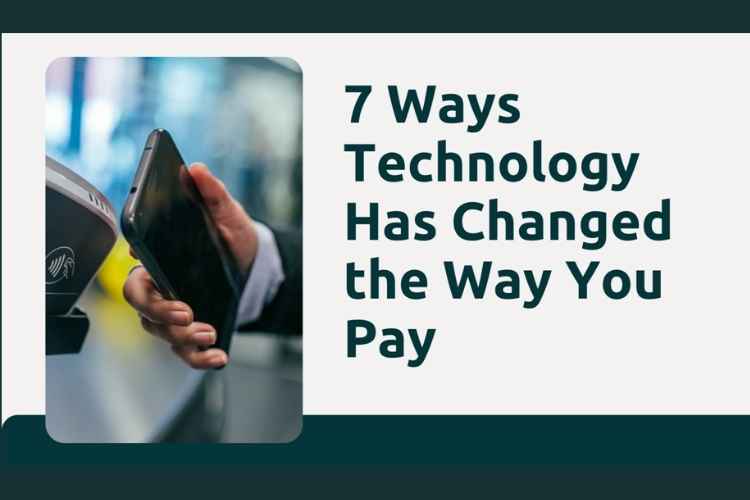

Payments are the lifeblood of any economy and experiences have changed significantly over the years. Issuers, payment processors, and traders are all investing to modify payment systems. The modifications are geared towards aligning with customer preferences and sector-specific requirements.
Looking back, the use of cash was the main mode of payment. Later on, there was the adoption of checks for larger ticket purchases. This change allowed people to move around with less cash. Then credit and debit cards came and gave people a larger purchasing power with thinner wallets.
Having moved from cash to contactless payments, consumers have more payment options. You can even use an EMV chip card or scan a QR code on your smartphone. However, you need to cover the EMV chip and protect it from tampering to keep your credit card functional. Some companies take this opportunity to brand their cards with a custom holder.
As it is, the different payment processes have advanced into something greater than initially thought. They have become significant in giving consumers better shopping experiences. Technological advancements have changed how we pay, forever!
Digital Payment Methods
In today’s world, people don’t think twice about swiping a piece of plastic to pay for goods and services. This is unlike before where your parents were likely to write a check and your grandparents possibly used cash payments.
The evolution of electronic payments has brought a range of payment options. In this article, we discuss some of the new ways we use to pay for goods and services.
1. Contactless Payments
The Covid-19 pandemic greatly increased the adoption of contactless payments. This is because clients can pay without physically touching a payment acceptance device. Clients just need to download the app, fill in the card details, then wave their smartphone across the reader when paying.
This mode of payment has added speed, convenience, and security to payments. It immediately moves the encrypted data to the point of sale device. What this does is that it provides clients peace of mind as they enjoy a safer way to pay.
Contactless payments are possible with NFC technology. That is why they’re also referred to as NFC payments. NFC is an acronym for New Field Communication. The technology allows users to send out and receive information through their phones. When a phone gets waved across any reader, encrypted data is moved from the NFC chip to complete the payment.
2. Mobile Point of Sale (PoS)
This revolutionary technology has freed traders from their physical locations and in-store payments. They’re now free to go to places such as concerts because they can easily receive payments from clients.
This mode of payment enables business people to safely capture payments from anywhere. It also provides unique experiences that bring good customer experience.
Mobile point of sale was first a payment solution for small to medium-sized businesses. But it slowly became an important consideration for the enterprise.
3. EMV Chip Cards
Bank accounts were initially recognized by random combinations of digits on a card. But today, EMV technology has picked up and introduced clients to a computerized and more secure mode of payment.
This technology uses varying codes every time transactions are made. This use of non-permanent codes has boosted security in bank accounts by leaps and bounds. This technology provides two-way communication between themselves and the payment acceptance device. This is important because it helps to authenticate transactions.
According to research, this technology has reduced counterfeit fraud by 76%.
4. QR Code Payments
QR codes have been used for ticketing, couponing, and advertising for a long time. But, the concept of their application in payment acceptance is new.
With options ranging from static codes to dynamically generated ones, this method has advanced over time. It can now be used by traders to create a good customer experience. The other advantages of the QR code include:
- The ability to store a large volume of data
- The code can get scanned from a screen and not only from paper
- It can be read even if part of the code is damaged
- It’s safer because information can be encrypted
When a QR code gets scanned, the software on your phone decodes the horizontal and vertical patterns of the matrix. The code then gets transformed into a string of characters. What follows next is for your phone to confirm the payment information. This is usually based on the command of the characters.
Although the QR code is popular in certain parts of the world, its use as a payment method is still growing.
5. Biometric Payments
The introduction of biometrics in payments was for authentication reasons. Clients use their facial or fingerprint scanners on their smartphones to authenticate payments.
It was with the rise in theft and fraud cases that biometric authentication was seen as a secure option. This technology provides a unique and important mode of payment. With it comes efficiency, accuracy, and security all in one package.
Since it involves unique characteristics, biometric authentication is a highly secured payment method. It also builds trust and loyalty in clients.
6. Peer-to-Peer Application
Peer-to-peer applications like Paypal are considered an easy way to transfer money. They can be used for anything, from paying the landlord to splitting a dinner bill between friends.
Setting up a peer-to-peer payment account is not as difficult as you might think. Users just need to sign up on the app by filling in personal details. The details include:
- The user’s name
- Bank name
- Address
- Country
- City
- Mobile phone number
The last step is to create a strong password and your account is ready for use. This mode of payment enables immediate transfer of funds. It provides speed, transparency, and security.
7. Mobile Wallet
A mobile wallet solution is a mobile application that imitates an actual physical wallet. This technology allows you to keep money in your wallet. It also enables you to send and receive money from other users. With this technology, users can pay utility bills, get rewards, and a lot more.
Mobile wallet also allows companies to evaluate their client’s usage.
There are many players involved in the mobile wallet. For instance, a mobile wallet is developed by company A, say Google. Credit cards on the other hand get generated by a different company. In short, a mobile wallet is made up of several components. The components work together to provide easy, quick, and cashless payment services.
Conclusion
We are likely to see the world completely transform from physical cash to digital payments. Thus, it’s safe to say that digital payments are the future.
Before the transformation concludes, different payment trends will have come and gone. These trends will certainly play a crucial role in shaping future payment methods.