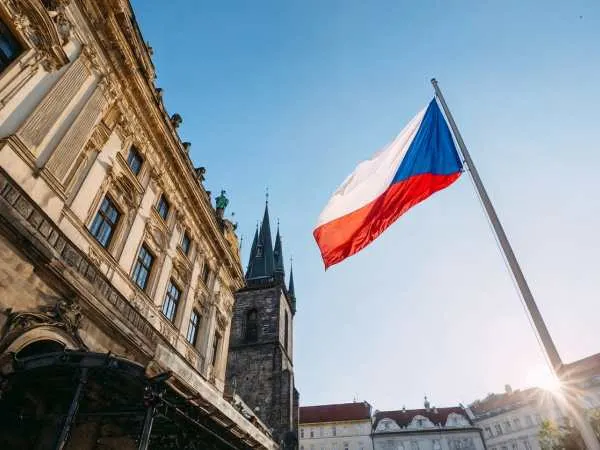

Ever looked at photos of Prague—the dreamy castles, the cobblestone streets, the gothic bridges glowing at night—and thought, “Okay… but where exactly is this place?”
You’re not alone. A surprising number of people mix it up with Germany, Russia, or even the former Czechoslovakia. So let’s clear up the confusion once and for all.
In this guide, I’ll walk you through:
- Where Prague is located in Europe
- Whether Prague is in Germany, Russia, or Czechoslovakia
- Prague’s country today
- A map-friendly explanation (no jargon, just clarity)
- Language, culture, fun facts
- And a few things I wish someone had told me before I visited
Let’s jump right in.
Where Is Prague Located? (Simple Answer)
Prague is located in Central Europe, and it is the capital city of the Czech Republic.
- It’s not Eastern Europe.
- It’s definitely not Russia.
- And no, it isn’t Germany either.
Prague sits almost right in the middle of Europe, which is one of the reasons its culture feels like a unique blend of Slavic, Germanic, and modern European influences.
🇨🇿 Which Country Is Prague In?
Prague is in the Czech Republic, also known as Czechia.
Quick facts:
- 📌 Country: Czech Republic (Czechia)
- 📌 Region: Central Europe
- 📌 Capital: Prague
- 📌 Currency: Czech koruna (CZK)
- 📌 Language: Czech
The Czech Republic became an independent country in 1993, after the peaceful split of Czechoslovakia.
Is Prague in Germany?
No.
But you aren’t completely crazy for wondering. Prague is actually very close to the German border—only about 150 km (93 miles) away in some areas.
Because of centuries of shared history and trade, the architecture feels a little Germanic in places…and that often confuses travelers.
Is Prague in Russia?
Absolutely not.
There’s no political, geographical, or cultural connection between Prague and Russia. The only similarity is that both places have Slavic roots—but that’s where the comparison ends.
Prague is a Western-leaning, EU member city deeply integrated with the rest of Central Europe.
Also Read : – Aesthetic Fonts in Canva: The Only Guide You’ll Ever Need
Is Prague in Czechoslovakia?
Prague used to be in Czechoslovakia.
But Czechoslovakia doesn’t exist anymore.
What happened?
- Before 1993: Prague = capital of Czechoslovakia
- After 1993: Czechoslovakia split into:
- Czech Republic (Czechia)
- Slovakia
Prague remained the capital of the Czech Republic.
Where Prague Is Located in Europe (Geographically)
Let’s break it down like you’d explain it to a friend:
- If you place your finger in the center of a map of Europe, you’re pretty close.
- Prague sits between Germany and Slovakia.
- Austria is directly to the south.
- Poland is just to the north.
Prague’s Coordinates
📍 50.0755° N, 14.4378° E
That puts it on the same latitude as:
- Frankfurt, Germany
- Winnipeg, Canada
- Kraków, Poland
No wonder the winters feel cold—you’re pretty far north!
Where Prague Is Located on a Map (Explained Simply)
If you opened Google Maps right now, you’d notice:
- Germany on the left
- Poland at the top
- Austria at the bottom
- Slovakia to the right
And Prague right in the middle of them—almost like the crossroads of Central Europe.
This prime location made Prague a historical magnet for trade routes, kings, artists, and (yes) invading armies.
What Makes Prague’s Location Unique?
Honestly, a lot. Here’s why so many travelers fall in love with the city:
1. Europe’s Heartbeat
It’s a true Central European capital—mixing medieval charm with modern city life.
2. Easy Travel
Germany, Austria, Slovakia, and Poland are just a few hours away.
Trains and buses make weekend trips ridiculously easy.
3. Blended Influences
Its central location allowed Czech, German, Jewish, and Slovak cultures to shape the city.
4. Safe & Walkable
Prague is one of the safest cities in Europe, and you can walk most of the center in a day.
Fun Fact: Why Is Prague Called “The City of a Hundred Spires”?
Because it literally has more than 100 spires.
Churches, castles, old towers—it’s a skyline straight out of a fairy tale.
Do They Speak English in Prague?
Yes—especially in:
- Tourist areas
- Hotels
- Restaurants
- Shops
- Younger locals
Older people may speak less English, but Czech hospitality shines through regardless.
Still, a quick “Dobrý den” (hello) makes you instantly likable.
Why Prague’s Location Matters to Tourists
Its central spot makes it:
🔹 Affordable (compared to Western Europe)
Food, beer, hotels, and transport are cheaper than in France, Italy, or Germany.
🔹 Close to everything
Within 4 hours, you can reach:
- Vienna
- Munich
- Bratislava
- Dresden
- Salzburg
Perfect for backpackers or weekend travelers.
🔹 Packed with historical landmarks
Every empire from the Habsburgs to the Holy Roman Empire left something behind.
Mini-History: How Prague Became the Capital
Here’s a quick timeline that won’t put you to sleep:
- 9th century: First fortified settlement
- 14th century: Prague becomes the capital of the Holy Roman Empire
- 1918: Capital of Czechoslovakia
- 1993: Capital of the Czech Republic (after the Velvet Divorce)
The city has been through wars, empires, and cultural revolutions—but it always remained at the center of Central Europe.
Also Read : – Amazing Apps For Amazon Fire Stick
FAQs About Prague’s Location
Where is Prague located in Europe?
Central Europe, in the Czech Republic.
Is Prague in Germany?
No, but it’s close to the German border.
Is Prague in Russia?
No. Prague is part of the EU and NATO, unlike Russia.
Which country is Prague in today?
The Czech Republic.
Is Prague still part of Czechoslovakia?
No—Czechoslovakia dissolved in 1993.
Final Thoughts
Prague isn’t just a dot on a map—it’s the heart of Central Europe.
A city rich with history, easy to travel around, and full of friendly faces, old-world architecture, and modern vibes.
If you’ve ever dreamed of wandering through a real-life storybook city, Prague is where your next adventure probably belongs.