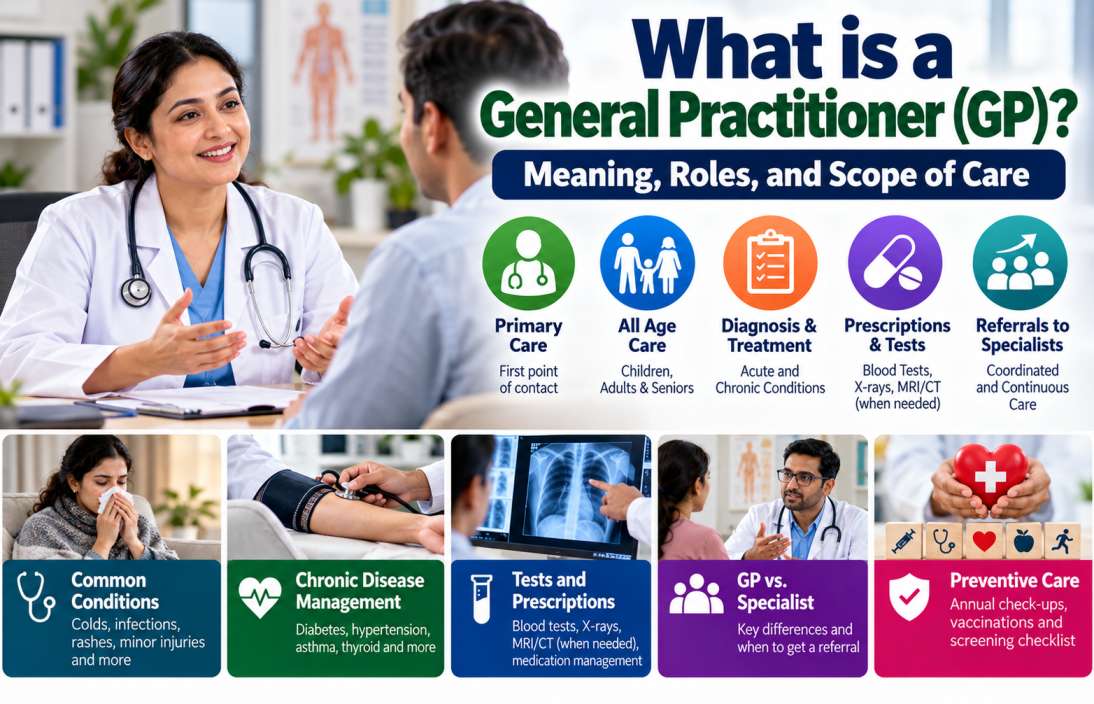

A general practitioner (GP) is a doctor who provides care for a wide range of health problems. People often visit a GP first when they feel unwell, need medical advice, or want a routine health check.
Unlike doctors who focus on one area, such as heart disease or skin conditions, GPs assess the whole person. They treat common illnesses, manage long-term conditions, prescribe medicines, and arrange tests when needed.
A GP can care for children, adults, and older people. They can guide patients through different stages of life and refer them to specialists when a problem needs more focused care.
This guide explains what a general practitioner does, which conditions they can treat, how GP and specialist care differ, and when to book an appointment.
The Role of a General Practitioner in Healthcare
A GP provides primary care, which is often the first point of contact with the healthcare system. This care covers prevention, diagnosis, treatment, and follow-up.
The World Health Organization describes primary care as an essential part of health services throughout life. It helps people access care close to their communities and supports referrals to hospitals or specialist services when needed. (WHO: Primary Health Care)
Primary Care and First Point of Contact
A GP is often the first doctor to contact when you have a new symptom or a health concern. You do not need to know the exact cause of a problem before booking a visit.
For example, a person with a persistent cough may not know whether it comes from an infection, asthma, allergies, or another cause. A GP can review the symptoms, examine the patient, and decide whether tests or further care are needed.
GPs commonly help with:
- Fever, cough, cold, and flu-like symptoms.
- Headaches, stomach pain, and digestive problems.
- Skin rashes and minor infections.
- Minor cuts, sprains, and other injuries.
- High blood pressure and type 2 diabetes.
- Preventive health checks and vaccinations.
- Initial support for stress, anxiety, and low mood.
The GP’s role is not limited to treating illness. They can discuss sleep, diet, exercise, smoking, alcohol use, and other habits that affect health.
Continuity of Care and Long-Term Patient History
Seeing the same GP over time can help build a clearer picture of your health. Your doctor can track symptoms, review past treatments, and compare new test results with earlier records.
This is useful for people who live with long-term conditions such as diabetes, asthma, thyroid disorders, or high blood pressure.
A GP may review your medicines, check whether treatment is working, and adjust the care plan within their scope of practice. They can involve specialists when symptoms change or treatment becomes more complex.
For patients who see several doctors, a GP can help coordinate care. This can reduce confusion about medicines, test results, and follow-up appointments.
What Conditions Can a General Practitioner Treat?
A GP can assess many common health problems and manage some complex conditions over time. The care available depends on the doctor’s training, the clinic’s facilities, and local healthcare rules.
Acute Illnesses and Minor Injuries
Acute illnesses start suddenly or develop over a short period. Many can be treated in a general practice clinic.
Examples include:
- Colds, flu-like illnesses, and some respiratory infections.
- Earaches and sore throats.
- Mild digestive problems.
- Urinary symptoms that need assessment.
- Simple skin conditions and minor rashes.
- Minor cuts, burns, and sprains.
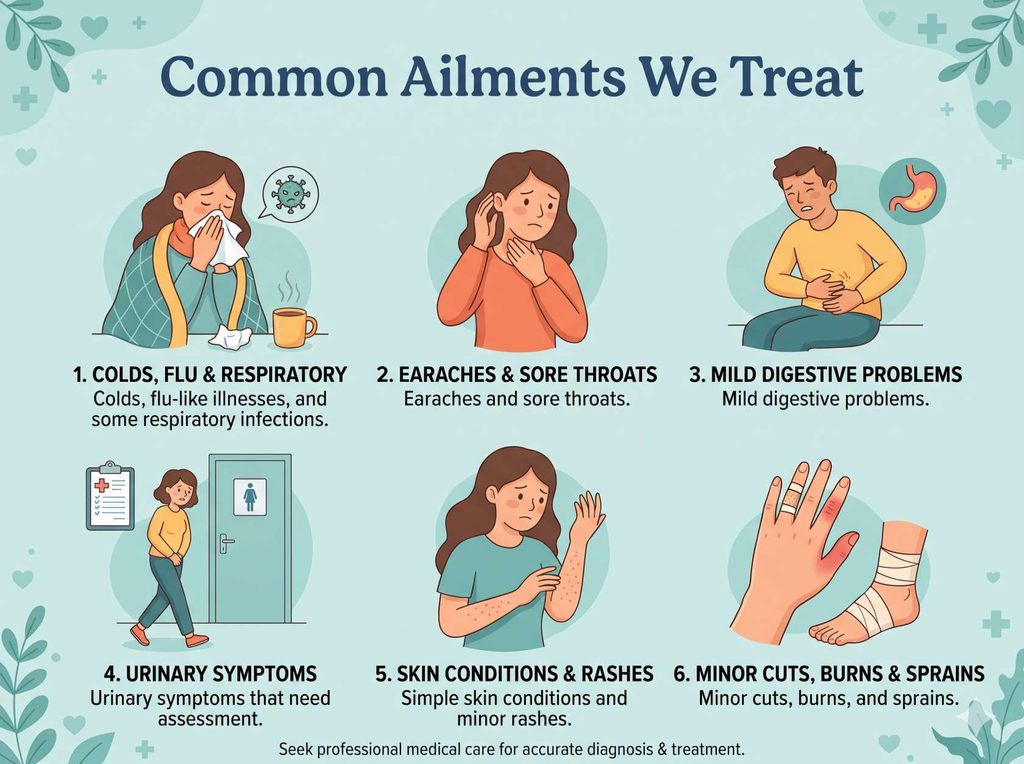
A GP can examine the patient, advise on home care, prescribe treatment when appropriate, and decide whether further tests are needed.
Some symptoms that seem minor at first can point to a serious problem. Severe pain, major breathing difficulty, heavy bleeding, fainting, or sudden confusion need urgent assessment rather than a routine GP appointment.
Managing Chronic Health Conditions
Chronic conditions often require ongoing care rather than a single visit. A GP can help monitor symptoms, review medicines, and track changes in health over time.
Common examples include:
High blood pressure: A GP can measure blood pressure, assess risk factors, and prescribe or review treatment.
Type 2 diabetes: Care may include blood glucose reviews, medicine management, lifestyle advice, and checks for complications.
Asthma: A GP can review symptoms, assess how well the treatment works, and help the patient follow an asthma action plan.
Thyroid disorders: The doctor may review symptoms, order blood tests, and monitor treatment.
High cholesterol: A GP can assess cardiovascular risk and discuss diet, activity, and medicines.
Mental health concerns: A GP can assess symptoms of anxiety, depression, stress, or sleep problems. They may provide initial treatment or refer the patient for counselling, psychiatry, or other support.
A GP does not need to manage every condition alone. Specialist input may be needed when a condition is difficult to control, causes complications, or needs a treatment outside the GP’s scope.
Diagnostic Testing and Prescriptions
Many people visit a GP because they need tests, a prescription, or help understanding a test result.
Depending on local rules and clinic facilities, a GP may order:
| Test or Service | Common Purpose |
|---|---|
| Blood tests | Check blood counts, glucose, cholesterol, or organ function |
| Urine tests | Assess urinary symptoms or other health concerns |
| X-rays | Assess certain bone, joint, or chest problems |
| ECG | Check the heart’s electrical activity |
| Ultrasound | Assess selected organs, tissues, or other areas |
| MRI or CT scan | Investigate certain symptoms or suspected conditions |
| Prescriptions | Treat or manage a range of health conditions |
| Medication reviews | Check whether medicines remain suitable and safe |
The tests available depend on the clinical question. A GP will decide whether a test is needed, based on symptoms, examination findings, and medical history.
Can a general practitioner order an MRI or CT scan?
In many healthcare systems, a GP can request certain imaging tests. Access rules vary by country, region, insurance plan, and facility. Some scans need specialist input or approval.
A GP may refer a patient for an MRI after reviewing persistent joint pain or neurological symptoms. A CT scan may be considered for specific concerns that need detailed imaging.
These scans are not routine checks for everyone. The doctor must weigh the likely benefit against risks such as radiation exposure from CT scans, cost, and the chance of findings that do not explain the symptoms.
General Practitioner vs. Specialist Physician: Key Differences
A GP and a specialist both diagnose and treat illness, but their roles differ.
A GP focuses on broad medical care and the relationship between different health needs. A specialist has deeper training in a particular area of medicine.
Broad Medical Knowledge vs. Focused Expertise
| Feature | General Practitioner | Specialist Physician |
|---|---|---|
| Main focus | Whole-person primary care | A specific field of medicine |
| Common role | First assessment and ongoing care | Focused assessment or treatment |
| Typical concerns | Common illnesses, chronic conditions, prevention | Conditions within a specialist field |
| Tests | Orders tests suited to the clinical need | May order advanced or specialist tests |
| Follow-up | Often manages health over time | Focuses on a particular problem or field |
| Referrals | Refers patients when needed | May refer to another specialist or back to primary care |
For example, a GP may assess chest discomfort and decide whether urgent care, an ECG, or a cardiology referral is needed. A cardiologist can then assess a suspected heart condition in greater depth.
The same principle applies to skin problems, joint pain, neurological symptoms, and other concerns.
The terms general practitioner and family medicine doctor can mean slightly different things across countries. In some places, family medicine is a recognised specialty with formal training requirements. In others, the term GP is used more broadly for a doctor providing general medical care.
Navigating Specialist Referrals
A GP referral helps connect a patient with the right specialist. It can include the symptoms, medical history, test results, and the reason for the referral.
A referral may be useful when:
- Symptoms persist despite initial treatment.
- A diagnosis remains unclear.
- A condition needs specialist testing.
- Treatment is not working as expected.
- The patient has a complex or rare condition.
- Specialist treatment is needed for a confirmed diagnosis.
Some healthcare systems or insurance plans require a referral before covering specialist care. Others allow patients to book directly.
If you think you need a specialist, tell your GP what concerns you and ask about the next steps. The doctor can explain whether a referral is needed and how urgent the visit may be.
When to See a GP vs. Going to the Emergency Room
A GP is suitable for many non-emergency health problems. An emergency department is meant for serious injuries and conditions that need immediate medical assessment.
| Situation | Where to Seek Care |
|---|---|
| Mild cold or sore throat | GP or suitable local primary care service |
| Routine blood pressure check | GP |
| Stable diabetes follow-up | GP, with specialist input if needed |
| Persistent rash without severe symptoms | GP |
| Severe chest pain | Emergency care now |
| Severe breathing difficulty | Emergency care now |
| Heavy, uncontrolled bleeding | Emergency care now |
| Sudden weakness, facial droop, or trouble speaking | Emergency care now |
| Loss of consciousness or severe confusion | Emergency care now |
Do not wait for a GP appointment if you think a condition is life-threatening. Contact your local emergency number or go to the nearest emergency department. (NHS: When to Go to A&E)
When Should You Visit a General Practitioner?
You do not need to wait until you feel very unwell to see a GP. Regular contact can help you prevent illness, catch some problems early, and manage existing conditions.
Annual Wellness Exams and Preventive Health Screenings
A preventive visit gives you time to review your health risks, vaccinations, family history, and lifestyle.
The right checks depend on your age, sex, family history, medical history, and local health guidance. Not every person needs every test each year.
A general preventive checklist may include:
- Blood pressure measurement.
- Weight and lifestyle review, where relevant.
- Blood glucose or diabetes screening based on risk.
- Cholesterol testing based on cardiovascular risk.
- Vaccination review.
- Age- and risk-based cancer screening.
- Review of medicines and supplements.
- Questions about sleep, activity, diet, alcohol, and tobacco.
- Discussion of mental health and stress.
A GP can explain which checks fit your situation and how often you need them. Some screenings are recommended only for people in certain age groups or with specific risk factors.
For example, the US Preventive Services Task Force recommends blood pressure screening for adults, with the frequency shaped by age and risk. Other screening schedules differ by country. (USPSTF: High Blood Pressure Screening)
How to Prepare for a General Practitioner Physical Exam
A little preparation can make your visit more useful.
Before the appointment:
- Write down your main symptoms and when they began.
- Note what makes them better or worse.
- Bring a list of medicines, vitamins, and supplements.
- Share relevant medical history, allergies, and past surgeries.
- Bring previous test results if they are relevant.
- Write down your questions so you remember them.
- Check whether the clinic has given you any special preparation instructions.
During the visit, describe your symptoms honestly. You do not need to know the medical terms. Clear details about what you feel, how often it happens, and how it affects daily life can help your doctor assess the problem.
If you feel unsure about a test or medicine, ask why it is needed, what the risks are, and whether other options exist.
Mental Health Support and Initial Triage
A GP can be a useful first contact for mental health concerns. You can discuss stress, low mood, anxiety, sleep problems, or changes in appetite and daily functioning.
The doctor may ask about your symptoms, how long they have lasted, and how they affect work, study, and relationships. They may offer initial treatment, arrange follow-up, or refer you to a mental health professional.
You do not need to wait until symptoms become severe to ask for help. Early support can make it easier to understand what you are experiencing and find the right care.
If you may harm yourself or someone else, or you cannot stay safe, seek urgent help through local emergency services or a crisis support service.
Final Takeaway: Why a General Practitioner Matters
A general practitioner offers broad medical care, from common illnesses and minor injuries to long-term disease management and preventive checks.
A GP can be the first person you contact when a symptom appears. They can assess the problem, arrange suitable tests, prescribe treatment, and refer you to a specialist when needed.
Regular primary care can help you keep track of your health and make informed choices. For the best results, choose a doctor you feel comfortable speaking with, share your concerns openly, and follow up when symptoms persist or change.
Remember that emergency symptoms need immediate care. A GP is an important part of healthcare, but not a substitute for an emergency service when time matters.