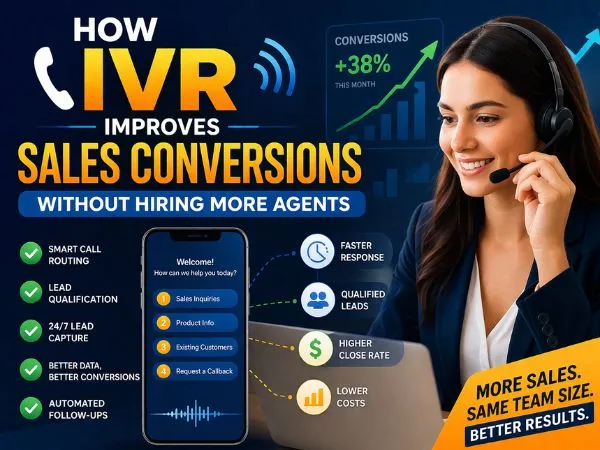

In fast-growing businesses, sales teams often face the same challenge: more leads, more calls, but not enough agents to handle them all. The instinctive solution is to hire more people — but that increases costs, training time, and operational complexity.
A smarter solution? Using IVR (Interactive Voice Response) to increase sales conversions without expanding your team.
When designed well, IVR doesn’t replace your sales team — it makes them more efficient, focused, and profitable.
The Hidden Sales Problem: Wasted Calls & Lost Leads
Many businesses lose revenue not because of poor products, but because:
- Sales agents spend time on unqualified leads
- High-intent callers wait too long and drop off
- Calls are routed inefficiently, delaying conversions
- Missed calls result in lost opportunities
IVR helps solve these problems by organizing, filtering, and accelerating the sales journey.
1. IVR Qualifies Leads Before They Reach Your Sales Team
Instead of sending every caller to an agent, IVR can pre-qualify leads using simple options like:
- “Press 1 if you want pricing”
- “Press 2 if you are an existing customer”
- “Press 3 if you want a demo”
This ensures that only high-intent prospects reach sales agents, allowing them to focus on closing rather than filtering.
Example:
A SaaS company offering CRM software uses IVR to separate demo requests from support calls. Sales agents now speak mostly to ready-to-buy prospects, increasing conversion rates without hiring more staff.
2. Faster Response = Higher Conversions
Speed matters in sales. The longer a customer waits, the more likely they are to abandon the call or choose a competitor.
IVR helps by:
- Routing calls instantly to the right agent or department
- Reducing hold times
- Ensuring priority leads get immediate attention
Example:
An EdTech company routes “course enrollment” callers directly to senior sales reps, cutting wait time by 40% and improving enrollments.
3. IVR Routes Leads to the Right Sales Expert
Not all leads are the same. IVR can route calls based on:
- Location
- Language
- Product interest
- Customer type
This ensures each prospect speaks to the most suitable agent, improving trust and conversion probability.
Example:
A fintech company routes premium customers to experienced sales consultants, increasing high-ticket deal closures.
4. IVR Creates a More Professional Buying Experience
A structured IVR flow:
- Builds brand credibility
- Makes the buying process feel smooth and organized
- Increases customer confidence in your business
Customers are more likely to purchase when the experience feels efficient and reliable.
5. IVR Turns More Calls into Revenue with Actionable Insights
With IVR analytics, businesses can understand:
- Which call paths convert best
- Where leads drop off
- Peak call times and demand patterns
This helps sales leaders optimize call flows, staffing, and sales strategy — improving conversions without increasing headcount.
Final Thoughts: Scale Sales Without Scaling Headcount
IVR is no longer just a customer support tool — it’s a sales growth engine.
By qualifying leads, speeding up response times, and routing calls intelligently, IVR helps businesses close more deals using the same team.
In a SaaS-driven world where efficiency matters, IVR gives companies a powerful advantage:
higher conversions, lower costs, and smarter sales operations.