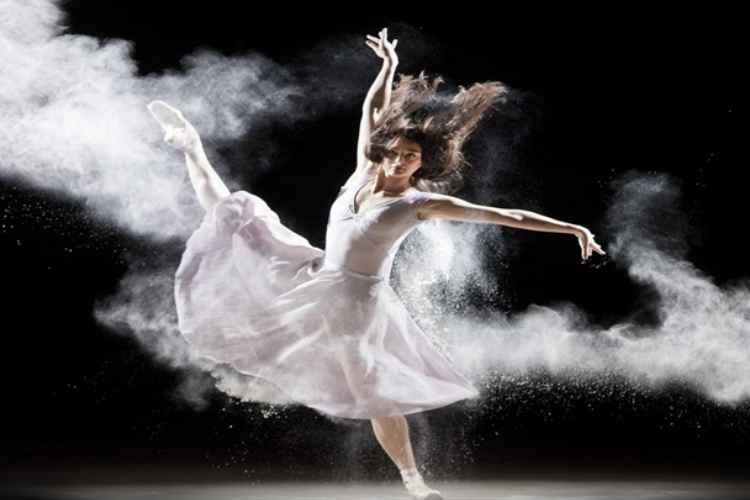

It doesn’t matter whether it’s in the ball season or in a hip dance studio, whether alone or in a couple, whether sexy salsa or fast-paced jive – Adelaide dance schools (click here for to see features) is right here for all since dancing is the best sideline in the world. For others, however, it’s a tough sport and it also puts a lot of strain on the little gray cells.
Dancing is so much more than just movement
We have slipped onto the slippery floor of prejudice to explore what dancing really is. At our side: the studied sports scientist Conny, presenter and multiple champion and state champion in dance sport. You know her from four seasons of “Dancing Stars”. In 2020 she teaches soul singer Cesar Sampson how it works. She says: “Me without dancing? It’s like living without breathing, eating without tasting, laughing without joy – it just doesn’t work. For me it is the most beautiful way of expressing feelings and touching people at the same time.”
4 common prejudices about dancing
“Dancing is not a real sport”
This is probably why you burn a whopping 600 kcal in 30 minutes with fast dances like the jive. (For comparison: jogging for 30 minutes burns around 300 kcal.) The challenge of dancing is not only the physical component. It is a fast-paced sport that keeps the cardiovascular system really busy and is also highly complex. There are several coordinative abilities, such as the ability to balance, the ability to couple, the ability to react, the ability to orientate oneself in space, the ability to rhythm, the ability to adapt, and the ability to differentiate kinesthetics, i.e., the accuracy and fine-tuning of movement. All of that is needed and trained in dancing.
“You need a partner for that”
Depends on the dance style. Some have a partner as a matter of principle, while many others do not. Hip-hop, contemporary, and street dance, for example, are designed to be danced alone. Kreutzer: “In every professional choreography there are individual passages that are danced alone. Salsa even has its own solo dance form called ‘Salsa Suelta’. Everyone dances alone with salsa steps to the music. Because: The music is our basis, and as soon as it plays, we can move to it. It doesn’t matter whether I do it alone or in a couple or with several people.”
“Dancers are naturally stretched and very coordinated”
“Oh no. To this day I can’t do the splits. I don’t have to. Dancing doesn’t mean lying on the floor and dying in beauty. Dancing means moving to the music. If someone can do the splits, that’s great, but it’s not necessary. And no coordination god has fallen from the sky,” laughs the Dancing Queen. “Everyone initially has difficulties with steps, as well as left and right legs. By dancing you learn to maneuver your body more nicely over a surface and your muscles become elastic.”
“Dancing is unmanly (and all dancers are gay) “
Dear men: Just ask the girls on the street if they find it unmanly when men can dance. In any case, the expert says: “I believe that shy European men started this rumor to distract from their fears. In other cultures, such as Cuba or Argentina, these prejudices do not exist. The men like to dance just as much as the women. It is deeply rooted in culture and tradition. Incidentally, during my master’s thesis in sports science, I found out that gay men can come out more easily in dance sport. On the one hand, because all outsiders assume it anyway, on the other hand, because there is a social environment in dance sport in which uniqueness is celebrated instead of despised. As the saying goes: I wasn’t born perfect, but real! “
So: what dancing really is
It makes you fit: Dancing trains the entire body. In this way, back problems can be successfully combated and posture improved. It also places new demands on the brain. Finally, the coordination between the footwork, the upper body and the movements to the rhythm of the music requires a lot of concentration and practice. This keeps your head in shape.
It makes you social: Researchers have discovered that special nerve cells called mirror neurons are activated when dancing. They hypothesize that these neurons are involved in understanding other people’s body language and emotions. When these areas are activated often, it leads to increased emphatic behavior, so the scientific assumption. So, dancing can save relationships, because love goes through the legs.
It makes you smile: In addition to the physical and coordination skills that dancing requires, it also needs to look good. It doesn’t matter whether a tennis player smiles on serve or not. You can’t do that with dancing. The emotions of the respective dance must be reflected in facial expressions and gestures. Oh yes, did you know: If someone in an American Indian tribe is depressed, no endorphins are tested in the blood. No, the medicine man asks when you last really laughed from the heart and danced really free from the soul.
Swing your hips with belly dancing
A 2014 Australian study found that belly dancers have better body image than Latin dance dancers.
All body types are accepted in oriental dance: slim women show their flat stomachs, round women play with their curves. However, all are sensual!
If you’re just starting out with belly dancing, you might be a little shy. You should show yourself half-naked? After a few bellies dance lessons, however, these doubts usually disappear. The beauty of this dance style and your own body can then be fully lived out.
You will also learn a lot about the human body in a belly dance class. And knowing how your own body works automatically leads to more self-confidence!
Oriental dance trains many parts of the body:
- The thigh,
- The hips,
- The back muscles,
- The glutes,
- The breast,
- The waist,
- Shoulders,
- The poor,
- The Abs etc.