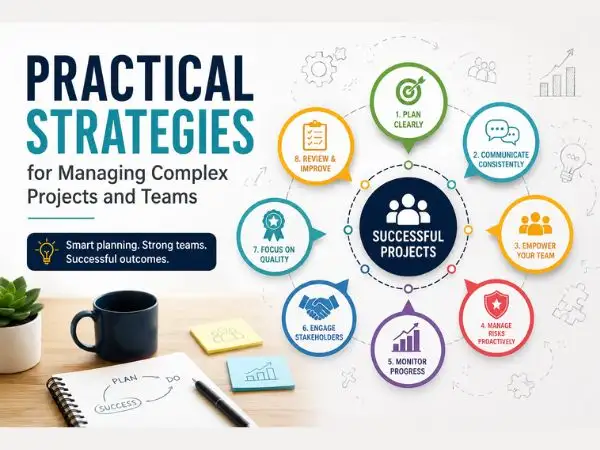

Complex projects appear in almost every industry. Construction, product development, infrastructure, and large business initiatives all involve moving parts that must align. Teams must coordinate schedules, budgets, materials, and decisions while solving problems that appear unexpectedly. The challenge is rarely the idea behind the project. The challenge is making sure people and processes move in the same direction.
Project management research highlights the difficulty. The Project Management Institute (PMI) reports that only about 57% of projects finish within their original budget, and roughly 11% of total project investment is wasted due to poor project performance. These numbers show that managing complexity is less about technology or theory and more about leadership, communication, and practical systems.
Effective project leaders rely on simple habits. They create clarity, build strong communication routines, and adjust quickly when problems appear. These strategies help teams stay aligned and keep projects moving forward.
Build Clarity Before Work Begins
Every successful project starts with a clear outcome. Teams must understand what success looks like before work begins. Vague goals create confusion later. A project objective should be written in simple language that everyone understands. The clearer the outcome, the easier it becomes for each team member to see how their work contributes to the final result.
Many experienced project leaders also break large projects into phases. This approach prevents teams from feeling overwhelmed by the scale of the work. Instead of tackling the entire project at once, teams focus on defined stages such as planning, design, preparation, execution, and review. Each stage has clear deliverables. When one phase is complete, the team moves forward with confidence.
This method keeps momentum steady. Teams see progress and understand where they are in the process. Smaller milestones also allow leaders to identify risks early and adjust plans before problems grow larger.
Align the Team Early
Complex projects often involve multiple roles. Engineers, designers, contractors, managers, and regulatory groups may all contribute. Many projects fail because these groups do not connect early enough.
Strong leaders bring everyone together at the beginning of a project. A short meeting where each team member introduces their role can create immediate alignment. People work more effectively when they know who is responsible for each part of the process. Clear introductions also reduce confusion when problems arise.
Communication rules also play an important role. According to FMI industry research, nearly 48% of construction rework is caused by miscommunication. This statistic highlights the importance of clear communication structures. Teams benefit from regular check-ins. Short daily updates during active phases keep everyone aligned, while weekly reviews help teams track progress and adjust schedules.
These meetings do not need to be long. In fact, shorter conversations often work better. A ten-minute discussion can prevent hours of rework later in the project.
Use Visibility to Prevent Surprises
Visibility is essential in complex project management. Leaders must know what is happening before problems become serious. Teams should track progress in a way that everyone can see. Simple visual tools often work best. Project boards, schedules, and task lists provide a shared view of the work.
When the entire team sees the same information, accountability increases. If something falls behind schedule, the issue becomes visible immediately. Leaders can then act quickly instead of reacting weeks later.
Encouraging honest updates is equally important. In some environments, team members hesitate to report problems because they fear blame. This behaviour can damage a project. Leaders should reward early reporting. When issues are raised quickly, teams can solve them before they grow larger.
Keep Decision Paths Short
Decision-making speed often determines whether a project succeeds or fails. When approval processes involve too many layers, progress slows dramatically. Complex chains of authority create delays that ripple through the entire schedule.
Effective leaders define decision roles early. Teams should know who has authority to make final calls on budgets, timelines, and design changes. When a problem arises, the responsible decision maker can act quickly.
Good decisions also rely on data rather than assumptions. Leaders examine schedules, cost estimates, and risk assessments before choosing a path forward. A clear review of available information often reveals the best option. Decisions based on evidence reduce uncertainty and help teams move forward with confidence.
Walk the Work
Project leadership cannot rely only on meetings and reports. Leaders must spend time where the work is happening. Walking through a job site or work environment often reveals problems that documents cannot show.
When leaders observe the work directly, they gain better insight into how tasks connect. They notice inefficiencies, safety risks, or workflow issues. These observations allow them to act before small issues grow into major delays.
Listening to team members during these visits also matters. Workers on the front line interact with the project every day. They often identify potential issues earlier than anyone else. Leaders who encourage open feedback gain valuable insight that improves decision-making.
Professionals across the industry share similar lessons. Many experienced construction leaders, including figures such as Vickie Dehart, emphasise the importance of staying close to the work environment. Presence builds trust and leads to better decisions.
Simplify the Workflow
Complex workflows often slow projects unnecessarily. Leaders should regularly review the steps involved in completing tasks. If a step does not add value or reduce risk, it may not be necessary.
Simplifying processes improves efficiency and reduces confusion. Teams can focus on completing important work instead of navigating complicated systems. This approach also reduces mistakes because fewer steps mean fewer opportunities for errors.
Standardising routine tasks helps as well. Templates, checklists, and consistent procedures create predictable results. Many industries rely on checklists because they reduce oversight errors. When teams follow the same structure each time, they avoid unnecessary variation.
Protect Team Energy
Complex projects often stretch across long periods of time. Fatigue can become a hidden risk. When teams feel exhausted, productivity and decision-making suffer.
Leaders should encourage sustainable work habits. Short breaks during demanding periods allow teams to recharge and maintain focus. Rotating responsibilities during intense phases can also reduce stress.
Recognising milestones is another effective strategy. Long projects can feel endless if teams do not acknowledge progress. Celebrating completed phases reminds people that the work is moving forward. Even small recognition moments can improve morale and motivation.
Build a Learning Culture
Every project provides lessons. Teams should take time to review what worked well and what did not. Short review sessions after major milestones help teams capture these insights.
Leaders often ask three questions during these reviews. What worked well? What challenges appeared? What should change next time? These conversations encourage honest reflection and continuous improvement.
Sharing knowledge across teams is also valuable. A technique that saves time on one project may benefit another team in the future. Documenting lessons learned allows organisations to improve their processes over time.
The Bottom Line
Managing complex projects and teams requires discipline and clarity. Strong leaders rely on practical habits rather than complicated systems. They define outcomes clearly, create communication routines, and maintain visibility across the entire project.
Data shows that project failures often result from poor coordination rather than poor ideas. When leaders focus on clarity, teamwork, and quick adjustments, teams perform better.
Complex work becomes manageable when leaders keep their approach simple. Clear expectations, open communication, and consistent presence allow teams to navigate challenges and deliver successful results.