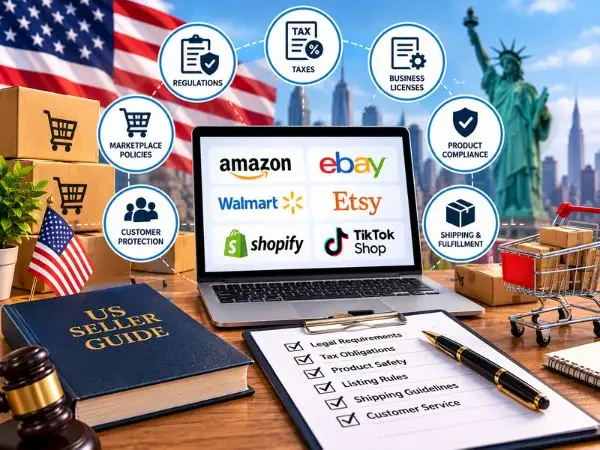

Before launching an e-commerce or retail business in the United States, several hidden costs, liability pitfalls, and regulatory tripwires require attention.
1. Hidden Costs & Budget Traps
Starting an e-commerce or physical retail business involves expenses beyond inventory manufacturing:
- State Formation & Annual Franchise Fees: Setting up an LLC incurs state filing fees (e.g., $40 in Kentucky, $300 in Texas, $500 in Massachusetts). Certain states also levy mandatory annual franchise taxes regardless of profit (e.g., California’s minimum $800 annual franchise tax).
- Payment Processing Friction: Payment gateways (Stripe, PayPal, Shopify Payments) charge standard rates of 2.9% + $0.30 per transaction. Failed transactions, chargebacks, and international card fees add an extra 1% to 2% plus chargeback dispute fees ($15–$25 per instance).
- Return Logistics & Restocking Costs: In US e-commerce, average return rates hover between 15% and 30% (even higher in apparel). Return shipping labels, inspection labor, damaged packaging, and liquidations must be factored into product margins.
- Storage & Long-Term Placement Fees: Marketplaces like Amazon charge dynamic inventory storage rates. During peak Q4 shopping windows (October through December), monthly storage fees spike roughly threefold, and items sitting past 180 to 365 days incur steep aged inventory surcharges.
2. Legal Traps: Corporate Veil & Product Liability
Operating without proper legal separation exposes personal wealth:
- Commingling Funds & Piercing the Veil: Paying personal expenses (groceries, rent) from your business account or funding inventory with a personal debit card invalidates LLC liability protections in court (“piercing the corporate veil”), leaving personal savings, vehicles, and real estate vulnerable.
- Strict Product Liability: Under US tort law, anyone in the chain of distribution (manufacturer, brand owner, distributor, or retailer) can be held strictly liable if a product injures a consumer or damages property—even if the defect was caused by an overseas supplier.
- Commercial General Liability (CGL) Insurance: Secure a CGL policy with at least $1,000,000 per occurrence / $2,000,000 aggregate coverage. Amazon mandates proof of insurance naming them as an additional insured once gross sales exceed $10,000 in any single month.
3. Trademarking & Intellectual Property (USPTO)
Securing an LLC name with your state does not protect your brand name nationwide:
- State Registration vs. Federal Trademark: Registering an LLC in one state only prevents identical company names within that specific state. It gives zero nationwide brand protection.
- USPTO Trademark Search: Before printing packaging or buying domains, run a search on the USPTO Trademark Search (TESS) system to confirm no existing trademark causes a “likelihood of confusion.”
- Amazon Brand Registry Access: Registering a word mark or design mark with the USPTO unlocks Amazon Brand Registry, granting access to A+ Content, Sponsored Brands ads, video stores, and proactive counterfeit removal tools.
Also Read : – How to Sell Products in the USA: The Complete Guide to Documents, Platforms, and Compliance
4. Mandatory Federal Packaging & Labeling Standards
All physical consumer products sold in the US must satisfy strict federal labeling rules:
- Fair Packaging and Labeling Act (FPLA / FTC): Requires product labels to disclose:
- Identity of the commodity (what the item is).
- Name and place of business of the manufacturer, packer, or distributor.
- Net quantity of contents in both Imperial (ounces, pounds, fluid ounces) and Metric (grams, milliliters) units.
- Country of Origin Marking: Under US Customs and FTC rules, every imported item must feature a conspicuous, legible English marking stating its origin (e.g., “Made in USA”, “Made in India”, “Made in China”). Using “Made in USA” requires proof that all or virtually all parts, processing, and labor originated domestically.
- Prop 65 Warning (California): If shipping goods into California that contain chemicals known to the state to cause cancer or reproductive harm (such as lead, cadmium, or phthalates), products must display clear Prop 65 warning statements on the packaging or retail product page.
Frequently Asked Questions (FAQ)
1. Can I legally sell products from my home or apartment in the US?
Yes, but you may need local zoning approval. Most cities and counties require a basic Home Occupation Permit to ensure your business does not cause traffic congestion, excessive noise, or hazardous chemical storage. If you rent or belong to an HOA (Homeowners Association), review your lease or HOA bylaws regarding home-based business operations.
2. Is an EIN required if I am operating as a sole proprietor?
An EIN is not legally mandatory for a sole proprietor without employees (you can use your Social Security Number). However, obtaining an EIN is strongly recommended because it is free on IRS.gov, prevents exposing your private SSN on wholesale applications and marketplace platforms, and is required to open a commercial business checking account.
3. What is the difference between a Seller’s Permit and a Resale Certificate?
Seller’s Permit (Sales Tax License): A state registration that gives you legal permission to collect sales tax from retail buyers.
Resale Certificate: A document you provide to wholesalers or manufacturers proving that you buy goods strictly for resale, allowing you to purchase inventory without paying upfront sales tax.4. Do I have to collect sales tax on every product sold across all 50 states?
No. You only collect sales tax where you have established nexus (either physical presence, such as an office or stored inventory, or economic nexus based on state revenue/order thresholds). Furthermore, if you sell exclusively through marketplace facilitators like Amazon, Walmart, or eBay, those platforms automatically collect and remit the sales tax on your behalf in almost every state.
5. How much money do I need to start selling physical products in the US?
Drop-Shipping / Print-on-Demand: $500 – $1,500 (covers domain, Shopify subscription, sample orders, LLC formation, and initial ad spend).
Private Label / Custom Manufacturing: $3,000 – $10,000+ (covers initial inventory production runs, GS1 barcodes, third-party lab safety testing, ocean/air shipping, and launch marketing).6. Do I need an FDA license to sell skincare, makeup, or wellness supplements?
The FDA does not issue pre-market “licenses” or approvals for cosmetics and dietary supplements, but you must comply with strict federal requirements. Under MoCRA, cosmetic manufacturing facilities must register with the FDA, list product ingredients, and maintain safety substantiation records. Dietary supplements must follow Current Good Manufacturing Practice (cGMP) regulations and carry standardized Supplement Facts panels.
7. Can I sell branded products (like Nike, Apple, or Sony) on Amazon or eBay?
Selling authentic goods purchased legally is protected under the First Sale Doctrine. However, major marketplaces restrict top-tier brands behind “gated” categories to combat counterfeiting. To sell gated brand products, platforms typically require verifiable wholesale invoices directly from the manufacturer or an authorized distributor (retail store receipts are generally rejected).
8. What happens if I make sales without a sales tax permit?
Selling taxable goods without registering for a seller’s permit in states where you have nexus is illegal. States can charge back-taxes out of pocket, levy statutory late-filing penalties (often 10% to 25% plus interest), and in severe cases, issue cease-and-desist orders or pursue criminal tax evasion charges.