
When people search newborn copperheads, fear usually sits right under curiosity. Baby venomous snakes trigger a special kind of anxiety. You hear things like they’re more dangerous than adults or they can’t control their venom. Some of that gets repeated so often it feels like fact. It isn’t.
I’ve spent time digging into real wildlife data, field observations, and expert notes, and the truth is calmer than the stories. Newborn copperheads are real. They are venomous. They are also small, predictable, and far less aggressive than people assume. Most danger comes from surprise and misidentification, not from the snake itself.
This blog walks through everything people want to know. Whether newborn copperheads bite, how many babies copperheads have, how long a newborn copperhead is, how far baby copperheads travel, how to tell a baby copperhead vs brown snake, and what baby copperheads look like in the fall.
What Are Newborn Copperheads
Newborn copperheads are baby copperhead snakes born alive, not hatched from eggs. Copperheads belong to a group of pit vipers that give birth to live young. When they arrive, they are already fully formed, independent, and venomous.
There is no parental care. No nest guarding. No teaching. Once born, each baby copperhead is on its own.
That independence shapes their behavior from the very first day.
When Copperhead Babies Are Born
Copperhead birth season usually runs from late summer into early fall. Most births happen between August and September, though timing can shift slightly based on climate and region.
This timing matters because:
- Leaves begin to fall
- Ground cover increases
- Snakes blend in better
That’s why people report more sightings in autumn.
Also Read : – Strawberry Moons: Meaning, Myths, Science, and Why This Moon Still Feels Special
How Many Babies Do Copperheads Have at a Time
One of the most common questions is how many babies do copperheads have at a time.
A female copperhead typically gives birth to:
- 4 to 10 babies, on average
- Sometimes as few as 2
- Occasionally as many as 15
Litter size depends on:
- Female size
- Age
- Health
- Environmental conditions
These babies spread out quickly after birth.
How Long Is a Newborn Copperhead
People expect newborn venomous snakes to be tiny threads. Copperheads are not.
How long is a newborn copperhead?
Most measure 7 to 9 inches at birth.
That’s long enough to:
- Strike defensively
- Deliver venom
- Move efficiently through leaf litter
They are small, but not fragile.
Also Read : –
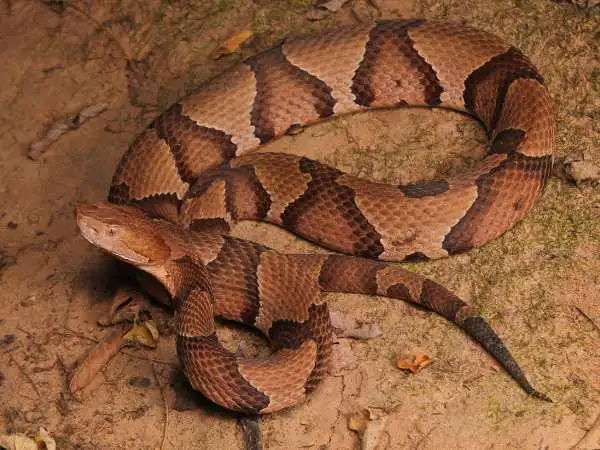
What Does a Newborn Copperhead Look Like
A newborn copperhead looks very similar to an adult, just scaled down.
Key features include:
- Light brown or tan body
- Hourglass-shaped bands
- Triangular head
- Vertical pupils
The most important feature appears on the tail.
The Bright Yellow Tail Tip
Baby copperheads have a bright yellow or greenish tail tip. Adults do not.
This tail serves two purposes:
- Luring prey like frogs or insects
- Distracting predators
The snake wiggles the tail to mimic a worm. It works well.
This tail fades as the snake ages.
What Does a Baby Copperhead Look Like in the Fall
The question what does a baby copperhead look like in the fall matters because fall is peak encounter season.
In autumn:
- Colors appear brighter
- Yellow tail stands out
- Body patterns contrast with leaves
Ironically, the same camouflage that protects them makes them easier to step on.
That’s when bites usually happen.
Also Read : – Can Cats Drink Cow Milk? Truth, Myths, and What’s Actually Safe
Are Newborn Copperheads More Dangerous Than Adults
This myth refuses to die.
People often say baby copperheads are more dangerous because they can’t control venom. That is false.
Newborn copperheads:
- Can control venom delivery
- Often deliver less venom
- Bite defensively, not aggressively
Adults can inject far more venom.
The real danger comes from not seeing the snake.
Do Newborn Copperheads Bite
Yes, newborn copperheads bite if threatened.
They bite when:
- Stepped on
- Grabbed
- Cornered
They do not chase. They do not stalk humans. Bites happen during accidents.
Most bites are defensive warnings.
What Happens If a Newborn Copperhead Bites You
A newborn copperhead bite is still a venomous snakebite. It requires medical evaluation.
Typical effects include:
- Immediate pain
- Swelling
- Bruising
- Redness
Serious outcomes remain uncommon, especially with fast treatment.
Venom quantity is usually lower than an adult’s bite.
Why People Get Bitten by Baby Copperheads
Bites usually happen because:
- Snake was hidden under leaves
- Person tried to move it
- Pet investigated it
Newborn copperheads rely on camouflage. That camouflage fails when feet enter the picture.
Also Read : – ICL Definition, How People Use the Term, and Why Meaning Depends on Context
How Far Do Baby Copperheads Travel From Nest
This question matters for homeowners.
How far do baby copperheads travel from nest?
Copperheads do not use nests the way birds do. Babies disperse almost immediately.
Most newborns stay within:
- A few hundred feet of the birth area
- Nearby cover like logs or rocks
They do not migrate long distances.
If you see one, others may be nearby, but not clustered.
Do Baby Copperheads Stay Together
No.
After birth:
- Babies scatter
- Each hunts alone
- No group movement occurs
Seeing multiple babies usually means they were born nearby, not traveling together.
Where Newborn Copperheads Hide
Baby copperheads prefer:
- Leaf litter
- Tall grass
- Wood piles
- Rock edges
They avoid open ground.
Homes near forest edges see them more often.
Baby Copperhead vs Brown Snake: Why People Confuse Them
The baby copperhead vs brown snake confusion causes unnecessary panic and unnecessary killing.
Brown snakes are non-venomous and helpful.
Key differences:
- Copperheads have hourglass bands
- Brown snakes have stripes or plain bodies
- Copperheads have vertical pupils
- Brown snakes have round pupils
Lighting and fear distort perception.
Why Misidentification Is So Common
Several factors cause mistakes:
- Low light
- Leaf-covered ground
- Fast movement
- Fear response
People see “small brown snake” and assume danger.
That assumption leads to poor decisions.
Copperhead Baby vs Juvenile Rat Snake
Another common mix-up involves rat snakes.
Rat snake babies:
- Have blotches, not hourglasses
- Lack yellow tail tips
- Grow much larger over time
Learning patterns reduces panic.
Are Newborn Copperheads Aggressive
No.
Newborn copperheads rely on:
- Freezing
- Camouflage
- Escape
They strike only as a last defense.
Aggression costs energy and risks injury.
Also Read : – Ways to Say Communication Skills, Better Phrases, Real Examples, and How They Show Up at Work
Why Baby Copperheads Freeze Instead of Flee
Freezing works.
Predators overlook still shapes. Copperheads evolved to blend, not sprint.
That stillness causes accidental encounters with humans.
What To Do If You See a Newborn Copperhead
Do not touch it.
Best actions include:
- Back away slowly
- Give it space
- Keep pets away
- Let it move on
Most will leave on their own.
Should You Kill a Baby Copperhead
No.
Reasons include:
- Many states protect wildlife
- Killing increases risk of bite
- Snakes control pests
Avoidance beats confrontation.
How Long Baby Copperheads Stay Small
Growth happens steadily.
Within:
- One year, they grow noticeably
- Two years, they resemble small adults
Survival rates are low. Predators remove many before adulthood.
Natural Predators of Newborn Copperheads
Many animals eat baby copperheads:
- Birds
- Raccoons
- Other snakes
- Mammals
Venom does not protect them yet.
Why Fall Has More Copperhead Encounters
Fall brings:
- Baby dispersal
- Increased human outdoor activity
- Leaf cover
Those factors overlap.
How To Reduce Baby Copperhead Encounters
Prevention helps.
Steps include:
- Clearing leaf piles
- Removing wood stacks
- Keeping grass trimmed
- Sealing crawl spaces
You don’t need chemicals. Habitat control works.
Pets and Newborn Copperheads
Dogs get bitten more often than people.
Reasons include:
- Curiosity
- Nose-first investigation
Training and supervision matter in snake areas.
Are Baby Copperheads Common in Yards
Yards near:
- Woods
- Creeks
- Rock walls
see more activity.
Urban lawns see far fewer.
Also Read : – Are You a Whiner or a Winner? The Real Difference Explained
How Long Newborn Copperheads Survive
Most face tough odds.
Many do not survive the first year due to:
- Predation
- Weather
- Starvation
Only a small percentage reach adulthood.
Why Fear of Baby Copperheads Is Overblown
Fear comes from:
- Venom label
- Size illusion
- Myths
Actual risk remains low with awareness.
FAQs
Do newborn copperheads bite
Yes, but only when threatened or accidentally stepped on.
How many babies do copperheads have at a time
Usually between 4 and 10.
How long is a newborn copperhead
About 7 to 9 inches.
How far do baby copperheads travel from nest
Usually only a few hundred feet from where they were born.
What does a baby copperhead look like in the fall
Small, patterned, with a bright yellow tail tip among fallen leaves.
Final Words
Newborn copperheads are real, venomous, and misunderstood. They don’t hunt people. They don’t swarm yards. They don’t act aggressively. Most danger comes from surprise, not intent. Learning what they look like, when they appear, and how they behave turns fear into awareness. And awareness keeps everyone safer—humans and snakes alike.