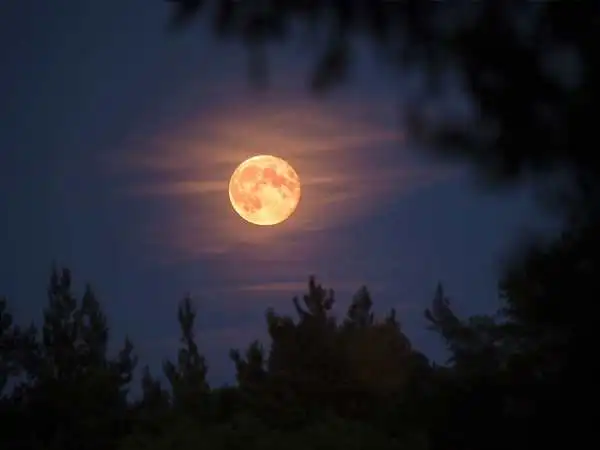

The phrase strawberry moons sounds soft, sweet, almost magical. It feels like something you’d expect to glow pink over a quiet field. That’s probably why people keep searching it year after year. But the real story behind the Strawberry Moon is deeper than color or aesthetics. It’s about seasons, survival, farming cycles, timekeeping, and how humans have always looked at the sky to make sense of life on Earth.
I’ve noticed something interesting. People don’t just ask when the Strawberry Moon happens. They ask why. Why that name. Why it matters. Why it feels different. And whether there’s something more going on than just astronomy. This blog pulls everything together—history, science, folklore, spiritual meaning, and modern questions like Strawberry Moon 2026, whether it’s actually pink, and when the last one appeared.
What Are Strawberry Moons
The term Strawberry Moon refers to the full moon that appears in June. It’s not a rare moon. It doesn’t happen once in a century. It appears every year. What makes it special isn’t how often it shows up, but what it represents.
This moon marked the beginning of strawberry harvesting season for many Native American tribes in North America. It wasn’t about color. It was about timing. The moon acted as a natural calendar.
Long before printed calendars or phone alerts, people watched the sky to know when to plant, harvest, move, or prepare.
Also Read : – Can Cats Drink Cow Milk? Truth, Myths, and What’s Actually Safe
Why Is It Called Strawberry Moon
The question why is it called Strawberry Moon has a very grounded answer. It comes from seasonal naming traditions, not appearance.
Indigenous tribes in the northeastern United States named full moons based on what was happening in nature at that time. June meant ripe strawberries. So the moon became the Strawberry Moon.
Other cultures had their own names for the same moon:
- Rose Moon
- Hot Moon
- Mead Moon
Each name reflected climate, crops, or seasonal work.
The strawberry name stuck because it feels poetic and easy to remember.
Is the Strawberry Moon Pink
This might be the most common misconception. Is the Strawberry Moon pink? No. Not naturally.
The moon does not change color because of its name. Most Strawberry Moons appear the same pale white or yellowish tone as any other full moon.
That said, sometimes the moon can look slightly orange or reddish. This happens when:
- The moon rises low on the horizon
- Atmospheric particles scatter light
- Smoke, dust, or pollution alter color perception
Those effects can happen during any full moon, not just June.
So if someone sees a pinkish or warm-toned moon during June, it’s coincidence, not design.
Why the Strawberry Moon Often Looks Larger
People often say the Strawberry Moon feels bigger or heavier in the sky. That perception comes from two factors.
First, the June full moon often rises lower than winter full moons. When the moon is closer to the horizon, the moon illusion makes it appear larger.
Second, warmer air creates atmospheric distortion that enhances color and size perception.
The moon isn’t closer. Your brain is just reacting to context.
Also Read : – ICL Definition, How People Use the Term, and Why Meaning Depends on Context
Strawberry Moon Spiritual Meaning
The Strawberry Moon spiritual meaning varies across cultures, but many themes overlap.
Common symbolic interpretations include:
- Growth
- Abundance
- Maturity
- Gratitude
- Emotional clarity
June sits at a turning point. Spring growth has already happened. Summer intensity hasn’t fully arrived. Spiritually, this moon represents a pause to recognize what has grown so far.
Many people see it as a moment to:
- Reflect on progress
- Release lingering emotional weight
- Set intentions grounded in reality
It’s less about new beginnings and more about honoring effort.
Emotional and Psychological Themes Linked to the Strawberry Moon
Some people report heightened emotions during June full moons. While science doesn’t confirm emotional changes caused by the moon, cultural expectation plays a role.
This time of year often brings:
- Longer days
- Warmer nights
- Social activity
- End-of-cycle reflection
When you combine those with a bright full moon, people naturally become more introspective or expressive.
Meaning comes from context, not magic.
Strawberry Moon 2026: What to Expect
People already search Strawberry Moon 2026, which tells you how far ahead interest runs.
In 2026, the Strawberry Moon will still follow the same pattern:
- Occurs in June
- Appears as a full moon
- Rises low in the sky
What can change slightly is:
- The exact date
- The time it becomes full
- Whether it coincides with other lunar events
Depending on location, visibility and timing may differ by several hours.
The name stays the same. The symbolism stays the same. The sky just shifts slightly.
Also Read : – Ways to Say Communication Skills, Better Phrases, Real Examples, and How They Show Up at Work
When Was the Last Strawberry Moon
The question when was the last Strawberry moon depends on the current year, but the pattern is consistent.
The Strawberry Moon always appears in June. The exact date varies between early and late June based on the lunar cycle.
People often remember the last one because:
- It coincides with warm evenings
- It rises during social hours
- It’s easier to notice
Unlike winter full moons, people are outside to see it.
Why June Full Moons Feel More Social
There’s a reason Strawberry Moons feel more communal.
June evenings are:
- Warmer
- Longer
- More active
People gather. Windows stay open. Light lingers. The moon becomes part of the shared atmosphere rather than a distant object.
That social setting amplifies its presence.
Strawberry Moon vs Other Named Moons
The Strawberry Moon isn’t alone. Each full moon has a traditional name tied to seasonal changes.
Examples include:
- Wolf Moon in January
- Snow Moon in February
- Flower Moon in May
- Harvest Moon in autumn
The Strawberry Moon stands out because:
- It’s tied to food
- It signals abundance
- It arrives during peak growth season
It feels celebratory, even without ceremonies.
Cultural Interpretations Across the World
Outside North America, June full moons carried different meanings.
In Europe, the moon often linked to:
- Mead production
- Early summer heat
- Agricultural planning
In Asia, lunar calendars marked festivals and planting cycles. While the name Strawberry Moon wasn’t used, the timing still mattered.
Humans everywhere looked up for guidance.
Science Behind the Full Moon Cycle
A full moon happens when the moon sits opposite the sun, fully illuminated from Earth’s perspective.
The cycle lasts about 29.5 days. That’s why full moon dates shift slightly each year.
The Strawberry Moon isn’t astronomically different from any other full moon. Its importance comes from human context layered onto natural cycles.
Science explains how. Culture explains why it matters.
Can the Strawberry Moon Affect Nature
There’s limited scientific evidence that full moons affect human behavior. But animals respond more strongly.
Full moons can influence:
- Nocturnal animal activity
- Predator-prey visibility
- Tidal strength
June tides combined with a full moon can impact coastal ecosystems, especially during breeding seasons.
Nature notices the moon even if humans debate its influence.
Also Read : – Are You a Whiner or a Winner? The Real Difference Explained
Why the Strawberry Moon Became Popular Online
Search trends show spikes every June. Social media amplified the name.
Reasons include:
- Visual appeal
- Romantic associations
- Easy storytelling
“Strawberry Moon” sounds better than “June Full Moon.” That matters in digital spaces.
Photography and the Strawberry Moon
Photographers love this moon.
Why?
- Low horizon position
- Warm atmospheric colors
- Seasonal landscapes
Fields, coastlines, city skylines—all pair well with a June moonrise.
It’s one of the most photographed full moons of the year.
Strawberry Moon Rituals: Old and New
Some cultures held harvest-related gatherings. Modern spiritual communities adapted those ideas.
Common modern practices include:
- Gratitude journaling
- Outdoor reflection
- Seasonal goal check-ins
These aren’t ancient mandates. They’re modern interpretations built on old rhythms.
Separating Symbolism From Science
It’s easy to blur lines. The Strawberry Moon doesn’t change fate. It doesn’t send energy beams. But symbols matter because humans use them to pause and reflect.
The moon gives structure to time. That alone carries meaning.
Why the Name Still Resonates
Strawberries represent:
- Short seasons
- Sweet reward
- Fragility
Naming a moon after them ties cosmic scale to everyday life.
That connection keeps the name alive.
Also Read : – Where Prague Is Located: A Complete Guide to the City Geography, History & European Identity
Common Myths About Strawberry Moons
Let’s clear a few up.
- It is not pink
- It is not rare
- It does not cause strange behavior
- It is not unique astronomically
What is unique is how people feel when they notice it.
FAQs
Why is it called Strawberry Moon?
It marks strawberry harvesting season, named by Native American tribes.
Is the Strawberry Moon pink?
No. The color stays the same as other full moons.
What is the Strawberry Moon spiritual meaning?
It often represents growth, gratitude, and recognizing progress.
When was the last Strawberry Moon?
It occurred in June of the most recent year.
When is the Strawberry Moon 2026?
It will appear in June 2026, with exact timing depending on location.
Final Words
The strawberry moons aren’t special because they break scientific rules. They’re special because they remind people that time once moved with seasons, not screens. A name rooted in fruit, harvest, and survival survived into an age of satellites and apps.
Every June, the moon rises. People look up. For a moment, calendars stop mattering. That quiet pause—shared across centuries—is why the Strawberry Moon still holds power today.