
You’re sick of writing monthly rent payments to your landlord. You’d rather purchase a home and begin accumulating equity with each monthly mortgage payment.
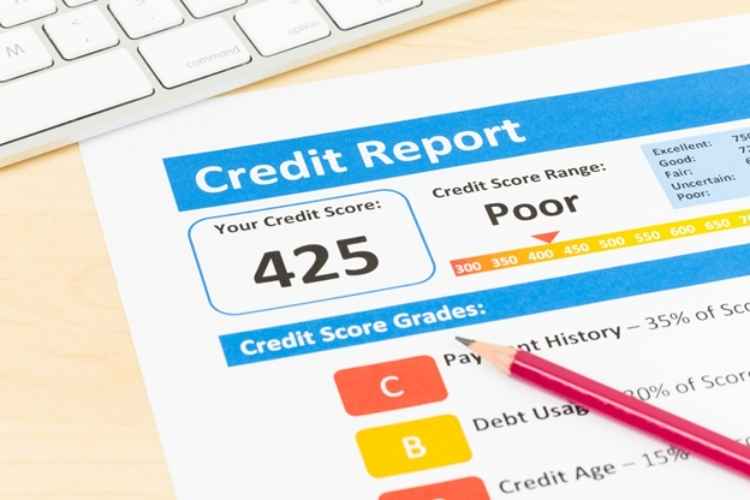
However what if you have a poor credit history? Is it still possible to purchase a house with a low FICO® credit score? The answer is yes. But, you’ll want to learn how to buy a home with bad credit, first.
Read on for our full breakdown of how to buy a house, even with bad credit. We’ll explore the various dos and don’ts.
How to Buy a Home With Bad Credit 101: Do Grab Your Credit Report
Of course, the first step is to determine where you’re starting from and what credit score you’re dealing with. AnnualCreditReport.com provides the most official report, but you’re usually only allowed one free report each year.
This will provide you with a report from each of the three major credit agencies (Equifax, Experian, and TransUnion).
They all employ somewhat different criteria to calculate your score, so each bureau will give you a different number, but it will most likely be in the same broad range.
The various credit score ranges are split into three areas to assist you to evaluate your credit health:
- Exceptional: 800-850
- Very good: 740-799
- Good: 670-739
- Fair: 580-669
- Poor: Under 580
A score in one of the top two categories will get you the best interest rates, while a score in the bottom two would make it more difficult to be approved.
You won’t qualify for every offer after you reach 670 since the “excellent” range is pretty typical, but you’ll have more choices.
Do Set Up a Budget for Higher Mortgage Interest
A low credit score indicates to lenders that you are a greater risk. To compensate for the risk, they will usually charge a higher interest rate on any loan offers they make (e.g. a 5% annual interest rate instead of 3 percent with a good score).
These single-digit discrepancies may seem insignificant, but they build up over the course of a 15- to a 30-year mortgage.
This article shows how your credit score may influence your mortgage rate, as well as how much more you could pay in the long run.
Fortunately, just because you start off with a high interest rate on your mortgage doesn’t mean you’ll be stuck with it for the rest of your life. When your credit improves, you may be able to refinance your mortgage at a cheaper rate.
Don’t Ignore Your Debt – Pay It Off
Your “debt-to-income,” or DTI ratio, may be even more significant to mortgage lenders than your credit score. This measure’s name is extremely descriptive. Your entire monthly debt payments are compared to your total monthly income.
This gives lenders an idea of how much additional debt you have and how much of your money you can devote to the remainder of your monthly expenditures.
To make your own, sum up all of your monthly debt payments (including credit card payments, auto loans, and school loans, as well as the mortgage payment you expect to make in the future).
Then divide it by your monthly average salary. Lenders demand DTI levels of less than 36%.
Do Determine Your Home Price Range
Before you go house hunting and have your heart set on a beautiful home that’s out of your price range, sit down and figure out how much you can spend.
You don’t want to be “house poor” by purchasing more homes than you need. This is when you spend a large portion of your salary on your mortgage/home costs, leaving little money to save, invest, or utilize for other needs.
Because you’ll almost certainly pay more interest if you purchase a home with poor credit, there’s even more incentive to buy below your means.
A reasonable rule of thumb is to keep your mortgage payments to no more than 28% of your yearly gross income. For example, if you earn $50,000 per year, you should search for a home and mortgage that costs no more than $14,000 per year, or around $1150 per month.
Besides, you’ll want to check out those homes for sale.
Don’t Forget to Save Up for Your Down Payment
Saving up a large down payment when purchasing a house with poor credit may make it simpler to qualify with different lenders. You may get a lower loan if you put down a portion of the buying price.
Furthermore, every dollar you save for a down payment reduces the amount of interest you pay on your mortgage. For two reasons, putting aside a 20% down payment on a house is a smart idea.
LTV (Loan-to-Value) Ratio
This figure compares the size of your mortgage to the worth of your house.
If you put 20% down on a $150,000 property and put $30,000 down, your mortgage loan amount will be $120,000. When you divide the loan amount by the home’s worth ($120,000/150,000), you obtain an LTV ratio of 80%.
PMI: Private Mortgage Insurance
If your LTV is more than 80%, you’ll almost certainly be forced to pay PMI (private mortgage insurance). In the event that a borrower fails on their loan, this insurance protects the lender. Because you’re deemed a higher-risk borrower with a lower down payment, you essentially pay PMI in exchange for them insuring you.
This does not, however, imply that you must save a 20% down payment. Even with increased interest and PMI, buying a house may be cheaper if you’re spending a lot on rent each month. Of sure, as long as you can be authorized.
Mortgage on Bad Credit: Simplified
Becoming a new homeowner can be a stressful process, and having a poor credit score can make the whole thing even more nerve-wracking than it needs to be.
We hope that our guide has shed some light on how to buy a home with bad credit. And, if you’re still looking for additional tips and tricks when it comes to real estate advice, then you’ll love checking out our real estate and lifestyle sections.