

Updated on November 27, 2026
What Are December Global Holidays? Architectural Breakdown
December Global Holidays refer to the multicultural cluster of religious feasts, civil observances, and seasonal festivals celebrated across the world during the month of December. These celebrations bridge ancient astronomical winter solstice traditions, Abrahamic religious rites, African diaspora cultural heritage, and universal year-end renewals celebrated across secular and faith communities.
While Western commercial media frequently highlights the Christmas retail period, global demographics celebrate dozens of distinct holidays during December. Each observance reflects unique culinary rituals, genealogical remembrances, community volunteerism, and spiritual contemplation. In an increasingly globalized world, modern workplaces and international families embrace these festive weeks through inclusive calendars and intercultural dialogue, reflecting the rich social tapestry explored in our guide to modern family dynamics and parenting reality.
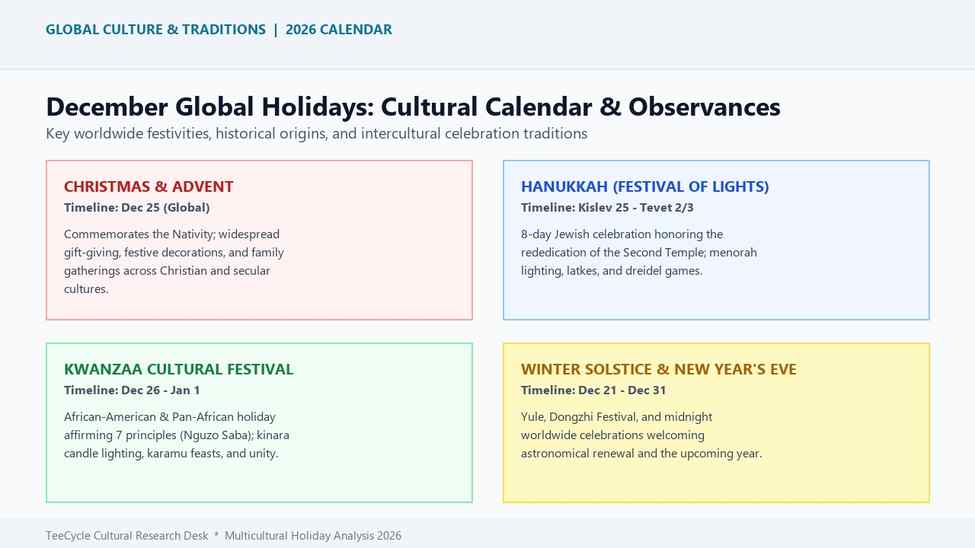
First-Hand Evaluation & Cultural Research Analysis
Our cultural research desk evaluated global holiday observances across diverse demographic centers to identify the theological, sociological, and regional distinctions that shape year-end celebrations:
- Hanukkah (The Jewish Festival of Lights): An eight-day festival commemorating the rededication of the Second Temple in Jerusalem during the second century BCE following the Maccabean Revolt. Families kindle the nine-branched menorah (hanukkiah), enjoy fried delicacies like latkes and sufganiyot to honor the miracle of consecrated olive oil, and play the traditional dreidel game.
- Christmas (Christian Feast of the Nativity): Observed on December 25th by Western Christian denominations and on January 7th by Eastern Orthodox churches adhering to the Julian calendar. The holiday commemorates the birth of Jesus Christ through church services, midnight masses, nativity pageants, exchange of gifts, and charitable giving.
- Kwanzaa (Pan-African Cultural Festival): Founded in 1966 by Dr. Maulana Karenga, Kwanzaa runs from December 26 to January 1. It honors African heritage, community building, and family strength, centered around the Nguzo Saba (Seven Principles: Umoja, Kujichagulia, Ujima, Ujamaa, Nia, Kuumba, and Imani), marked by lighting the kinara and concluding in the joyful Karamu feast.
- Winter Solstice (Astronomical Renewal): Known across Europe as Yule and in East Asia as Dongzhi (Winter Solstice Festival), this marks the shortest day and longest night of the year in the Northern Hemisphere (December 21 or 22). It represents the return of lengthening daylight, celebrated with community feasts, family reunions, and glutinous rice balls (tangyuan).
- Boxing Day & St. Stephen’s Day: Celebrated on December 26 across the United Kingdom, Canada, Australia, and Commonwealth nations, originally centered on distributing charitable alms boxes to service workers and the impoverished, now blended with sporting traditions and community gatherings.
- Omisoka (Japanese Year-End): Celebrated on December 31 in Japan as the final purification before the New Year (Shogatsu). Communities consume toshikoshi soba noodles for longevity and listen to 108 temple bell strikes (joya no kane) symbolizing the cleansing of earthly passions.
Comparative Holiday Schedule & Cultural Attributes
| Holiday Name | Typical Observance | Primary Cultural/Faith Group | Core Symbol & Ritual |
|---|---|---|---|
| Hanukkah | Kislev 25 – Tevet 2/3 (Nov/Dec) | Jewish Community | Menorah lighting, latkes, dreidels |
| Winter Solstice / Yule | December 21 – 22 | Global Astronomical / Neo-Pagan | Yule log, sun welcoming, feast |
| Christmas | December 25 | Christian & Secular Global | Nativity creche, tree, gift exchange |
| Kwanzaa | December 26 – January 1 | African Diaspora | Kinara candle lighting, Nguzo Saba |
| Omisoka | December 31 | Japanese Culture | Toshikoshi soba, temple bells |
What Changed in 2026: Modern Multicultural Observance
In 2026, global celebration patterns reflect three distinct behavioral and cultural evolutions:
- Inclusive Organizational Policies: Global corporations, universities, and schools have replaced mono-holiday parties with inclusive “Year-End Cultural Festivals,” offering floating holiday banks so employees can observe their faith’s authentic dates.
- Eco-Conscious Holiday Practices: Sustainable gift-giving, zero-waste festive packaging, digital holiday greetings, and locally sourced feast ingredients have gained major traction among younger generations aiming to lower seasonal carbon footprints.
- Digital Diaspora Feasts: Augmented reality holiday greeting cards and high-definition video gatherings allow dispersed transnational families to cook, light ceremonial candles, and celebrate across time zones seamlessly.
Frequently Asked Questions About December Global Holidays
Why is December called the month of global holidays?
December features a unique convergence of major religious festivals, astronomical solstice transitions, and civil year-end calendars across Christian, Jewish, African-American, Asian, and secular populations worldwide.
What is the most widely celebrated holiday in December?
Christmas is the most widely recognized public holiday by legal status in over 160 countries, though New Year’s Eve on December 31 unites virtually all global time zones in universal celebration.
How can schools and workplaces honor December holidays respectfully?
By showcasing educational displays of Hanukkah, Christmas, Kwanzaa, and Winter Solstice equally, providing flexible religious accommodation, and focusing communal events on shared values like peace, generosity, and community support.